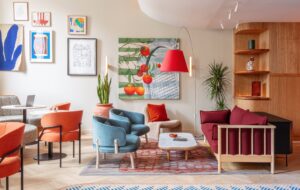
Small but smartly designed studios can still serve their inhabitants well. New architecture firm Tabula Studio, for instance, has recently crafted a workspace that is also a showcase for its design approach
Founder Nerea Apraiz and her team repurposed a small consultancy office in a historic building in the heart of the bustling Ensanche neighbourhood in Bilbao. They were drawn to the building’s high ceilings and French windows that establish a direct dialogue with the city. “We were captivated by the nobility of the building’s architecture and the possibility of transforming it into a living, contemporary space full of personality,” says Apraiz.
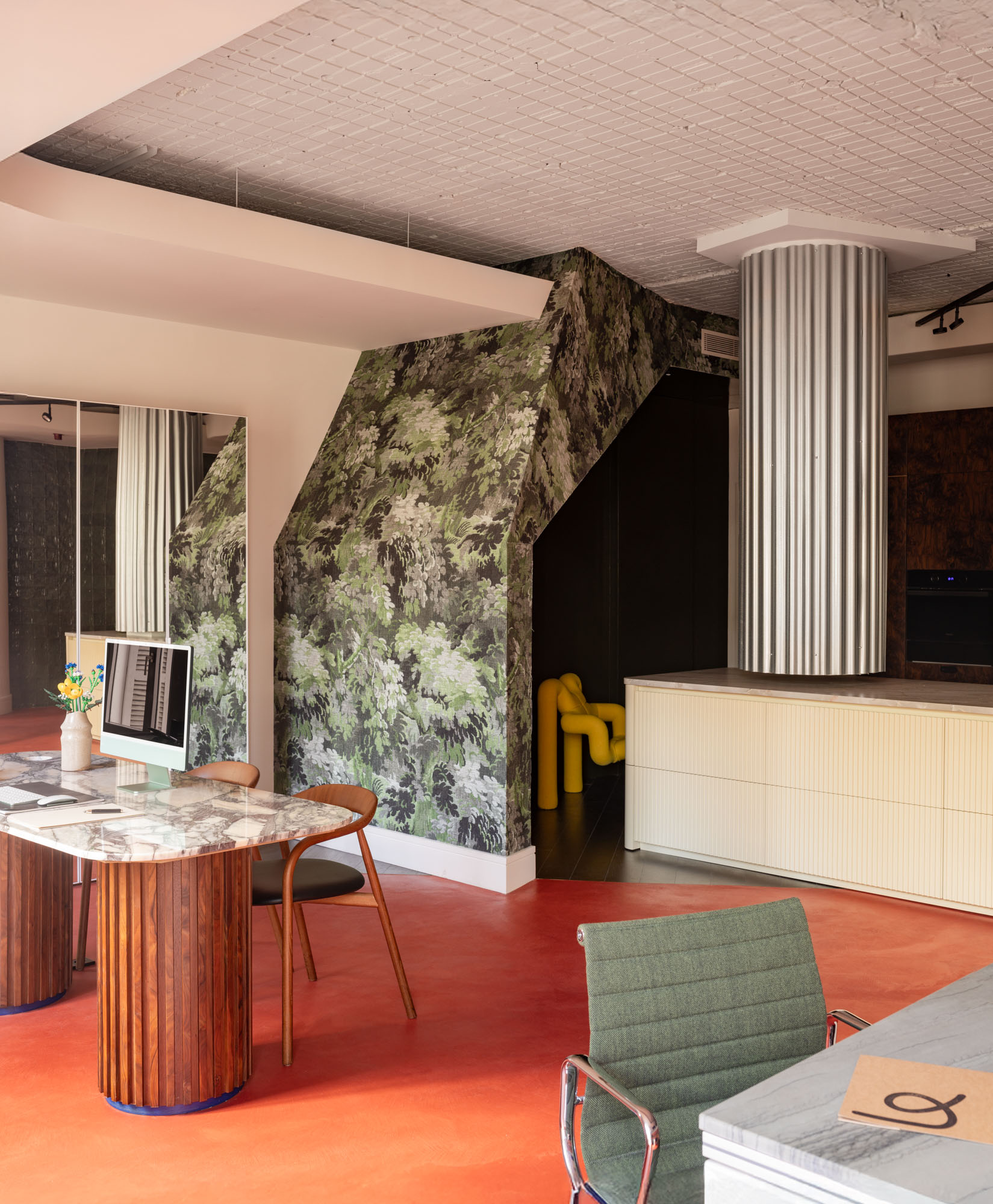
Despite its compact size – just 92 sq m – the team has made it work for them by rethinking the layout to accommodate five workstations and a meeting room with a glass enclosure, which maintains the feeling of openness without sacrificing privacy.

The studio is set up as a sensory journey, where clients can explore a variety of finishes, shapes, designs, textures and colours, from chestnut and maple used in the bathroom fixtures, to walnut burl in the kitchen, and American walnut and oak for the meeting table. The space happily nods to Pomo – with giant pillars clad in corrugated sheet metal, an asymmetrical ‘house’ at the entrance that houses a bright yellow Ekstrem chair, designed by Terje Ekstrøm for Varier, a red cement floor and milled panelling on the meeting room wall with a cubist image designed by Tabula Studio. A boldly coloured and padded chair and stool from French firm Moustache are positioned against a dark-green tiled wall.
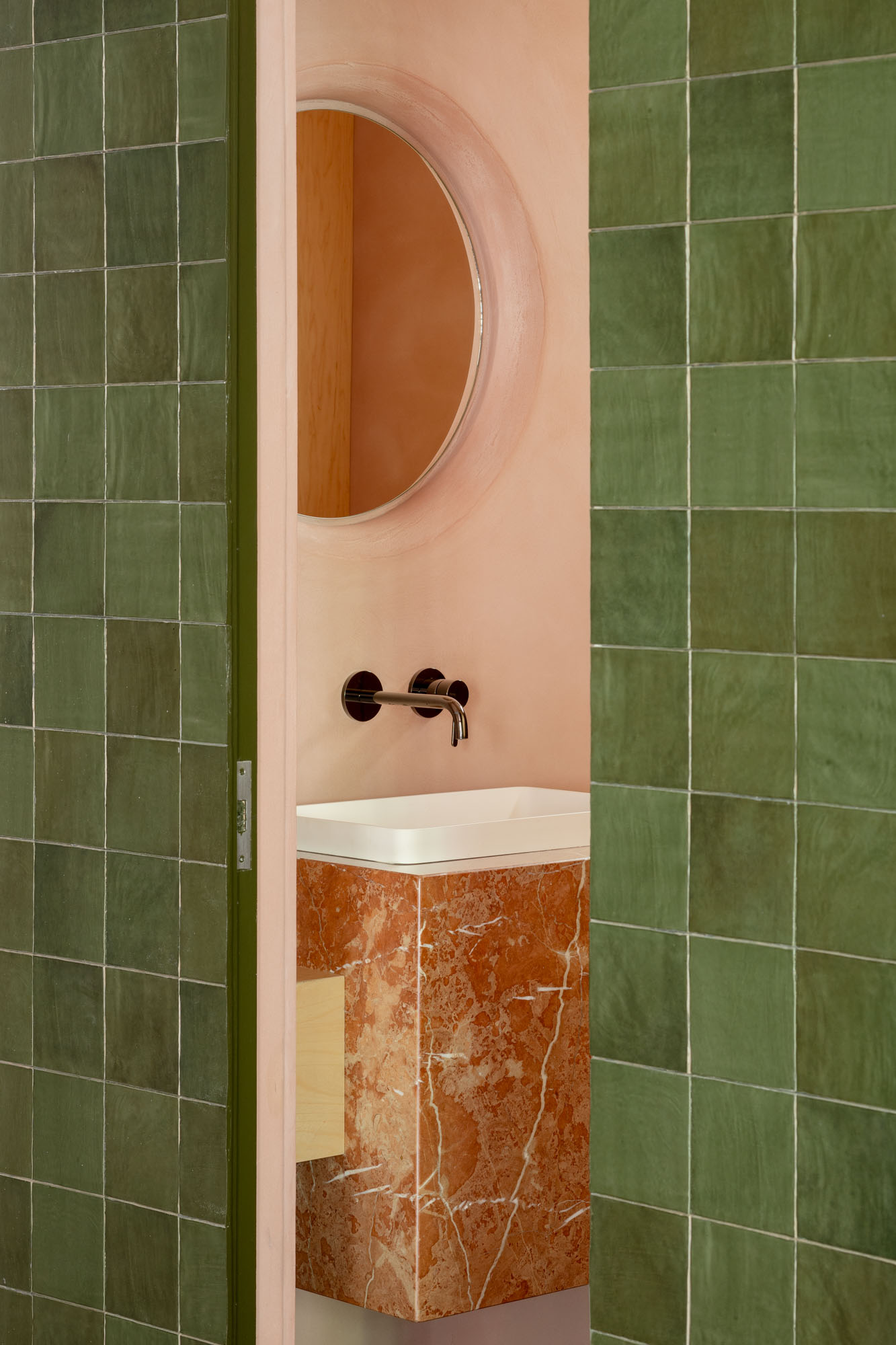
“The studio’s design faithfully reflects our philosophy and what we offer,” says Apraiz. “We wanted to create a place that also functions as a showroom – an invitation to discover – filled with textures, finishes and unexpected solutions.” The two bathrooms – one blue, one pink – have been reimagined as a showcase for the various design and functionality alternatives that Tabula Studio offers its clients.
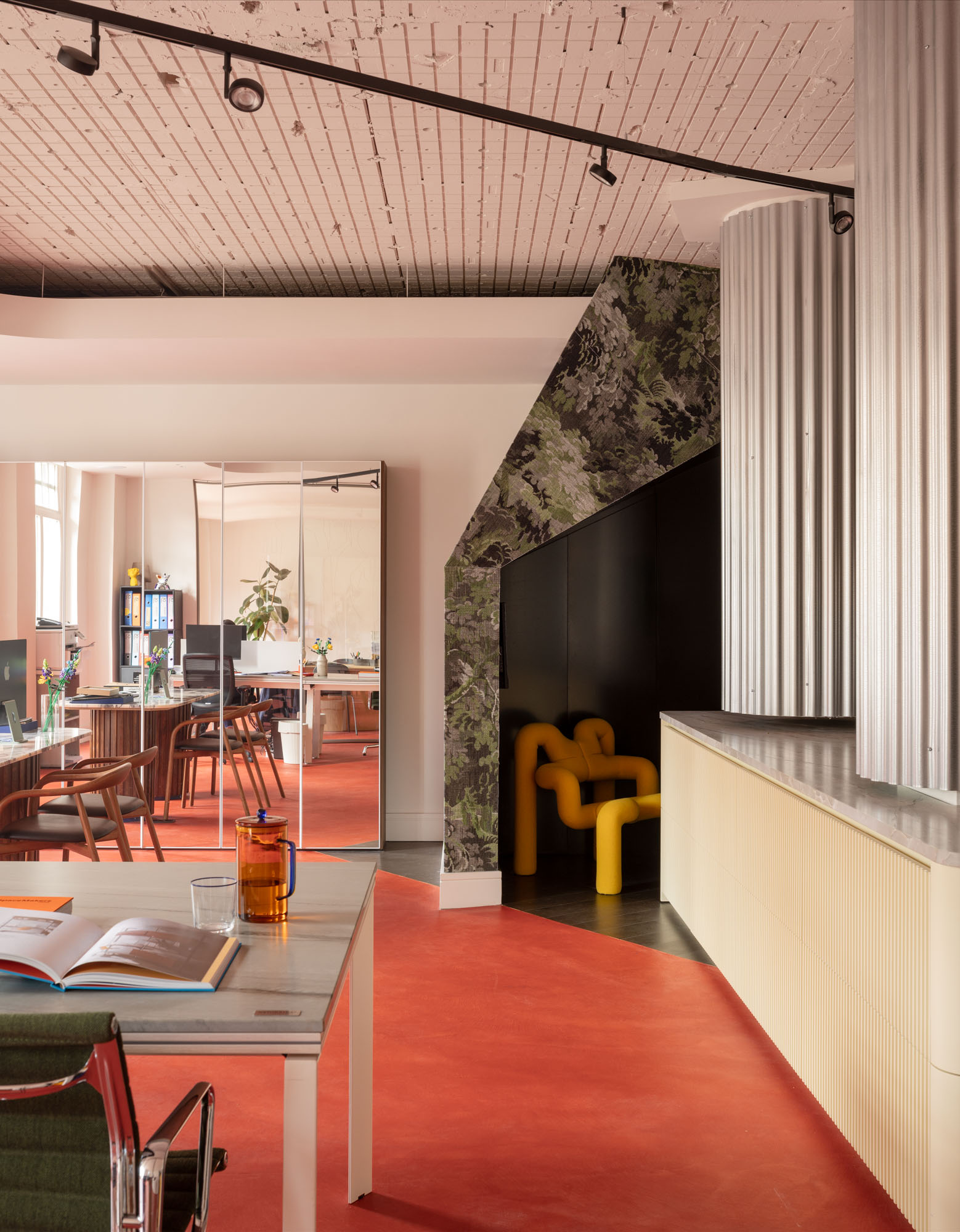
“We’re comfortable with eclecticism because we don’t believe in labels, and each project represents a unique creative challenge,” says Apraiz. “That diversity and expressive freedom had to manifest itself in our workspace. The space grants us freedom, drives us to create and we believe our clients also perceive that energy. It’s a living place where architecture is experienced, not just conceived.”

Photography by Erlantz Biderbost
Find out more via Tabula Studio’s website here.