For Desa Potato Head, a creative village in Bali, London-based designer Max Lamb has crafted a collection of homeware and furniture from the area’s own waste materials
With its black sand beaches, volcanic mountains, numerous temples and some of the best surfing in the world, it’s little wonder that Bali has developed as a top-tier holiday destination, synonymous with luxurious accommodation and digital nomads.

But all this can leave a trail, so it was imperative for Desa Potato Head, a ‘creative village by the sea’, to nurture its surroundings while also supporting the island’s thriving traditional arts and crafts scene. The company tapped designer Max Lamb to work on a collection of pieces that could be made by local artisans out of waste generated by the hotel, which recycles almost all its discarded materials. “I was invited by Potato Head to design much of the furniture for its 168 rooms, as well as ceramics, glassware, coasters, lounge chairs, balcony chairs – a huge list of pieces,” says Lamb. “To be able to start designing such a large array of items, each with very different functions, I needed to use different materials and processes.”

It was important for Lamb to spend time in Bali to understand the potential of the area’s indigenous and contemporary skills and craftsmanship, and the trip proved both exciting and formative for the designer. “It was part of my mantra, my manifesto, for the project, that I didn’t want to import anything. I felt it was very important that everything be made in Bali,” he says. Wasted 001 is culmination of a five-year collaboration between Lamb and the Potato Head brand, the brainchild of hospitality entrepreneur Ronald Akili. The first Potato Head Beach Club opened in 2010 and, from the get-go, sustainability was front and centre. The beach club eventually evolved into Desa Potato Head, which now includes a resort, restaurants and several creative spaces. Katamana (now Potato Head Suites), by Indonesian architect Andra Matin, opened in 2015 with a strong focus on the country’s craft culture, followed by Potato Head Studios by OMA, where visitors can stay and work, which is where the idea of a creative village, or ‘Desa’, comes from. “As we evolved, we became more aware of the environmental issues our island faced,” says Dan Mitchell, creative director of Desa Potato Head.

“We realised that waste was one of the biggest blind spots in the industry, so we decided to make it visible – to work with it and learn from it.” So Potato Head developed a space where it could collect, recycle and transform waste into materials and products used in its operations, after which it brought together local businesses and created a centralised waste-management hub for the whole island. “At Desa, Indonesian artists collaborate directly with international designers, materials are reused and reimagined and waste becomes a resource,” Mitchell explains.

Which brings us neatly to Max Lamb, a designer synonymous with both traditional and unconventional material usage in a career spanning nearly 20 years. His projects include My Grandfather’s Tree, in which a felled ash in Yorkshire was divvied up into logs from which stools, tables and chairs were made; 2023’s Box at Gallery Fumi, a collection of furniture consisting of recycled cardboard and homemade glue; as well as past explorations in pewter and a marble-derived material called Marmoreal.
Fast forward to 2025, and Lamb is reflective on this latest part of his sustainable materials mission. “I had some ideas of what I wanted to see, but I’d never experienced these crafts first-hand before. The local craftsmanship was really the catalyst for all my designs.”

The collection consists of eight distinct material families, each derived from a specific local waste stream, whether that’s broken glass repurposed through mouth-blown techniques, cooking oil turned into refillable candles or salvaged ceramics given a new life.
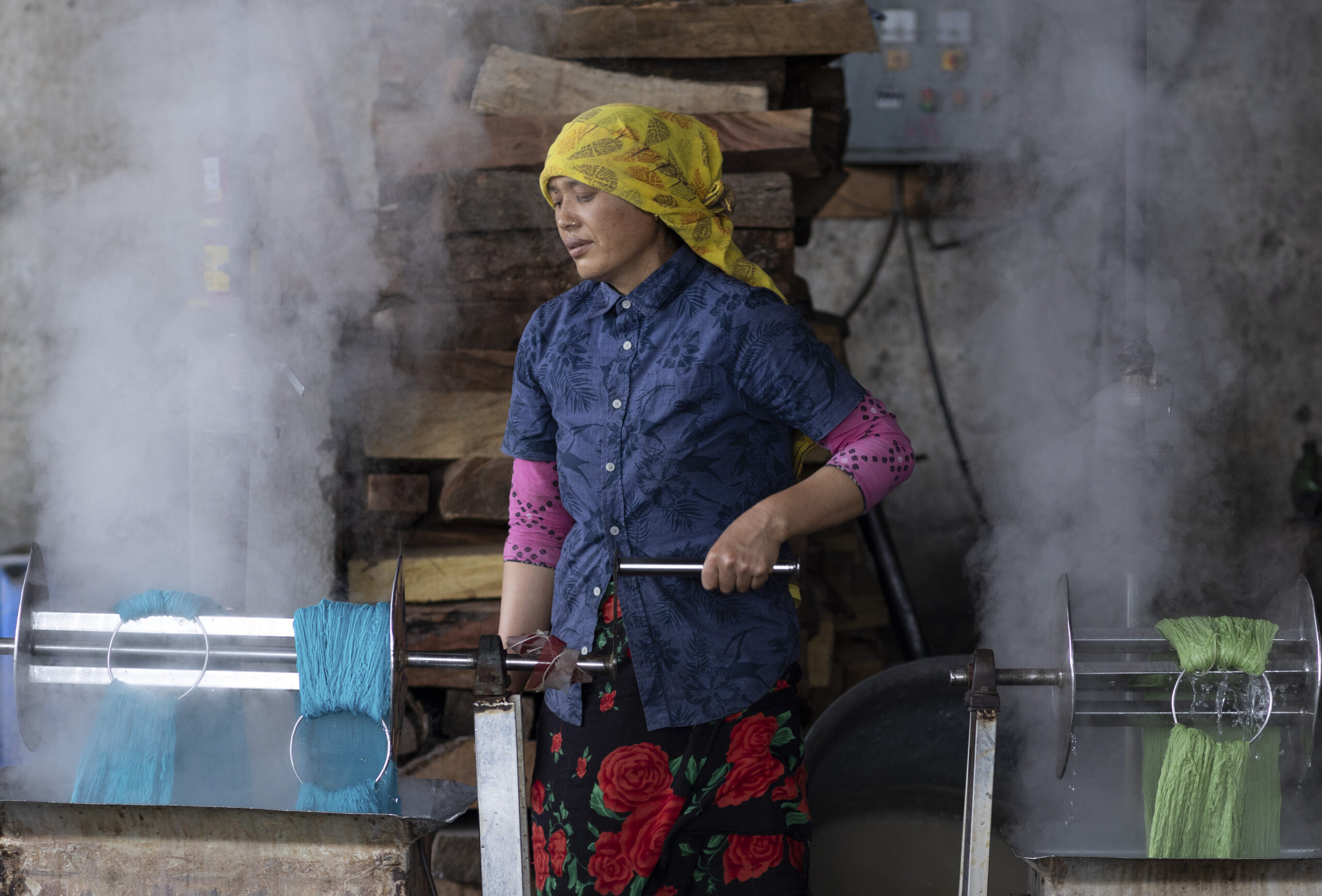
After researching the kind of crafts that are associated with Bali, such as indigo dyeing and hand weaving, Lamb created a range of products, such as a low-slung chair fashioned from more than 30 bamboo poles, trays made from Styroshell – a mix of old polystyrene and oyster shells – and even tote bags created from old hotel bedsheets.

Although he sourced most of the waste materials locally, there was one exception. “The one thing that I decided to import from the West was the Study chair, made using Smile Plastics, a brand from the UK that recycles British post-industrial plastic.”
His hope was to find an equivalent material in Bali, but it wasn’t available at the time. “We made it work in the end, however, and we now have the necessary machines there to demonstrate the huge potential of recycled plastic,” he says with enthusiasm. “I designed this chair around that material, creating it in a way that allowed the local craftspeople to fabricate it by hand. Each chair has its own unique personality and characteristics, as it is cut freestyle with a jigsaw, without precise measuring or accuracy. As a result, every single chair is one of a kind and made out of 100 per cent recycled plastic.”

“The outcome of the first collection was a new design language – waste-led design,” adds Mitchell. “Every object tells a story of transformation. Plastic bottles became chairs, food waste became amenities and so on. The process is about reshaping perception.” What’s more, a second collection is already in the works.

Lamb is equally enthusiastic about the future of this kind of sustainable design. “When people respect the product, the material and the design, they’ll take care of it and make it last longer, rather than thinking, ‘I’m tired of this, I need to replace it with something new.’ It’s the opposite of fashion – removing style from the equation and instead designing objects with pragmatism, respect and necessity in mind.”

Photography by Adrian Morris / Dwinanda Aldyan
This story was originally featured in OnOffice 173, Winter 2025. Discover similar stories by subscribing to our weekly newsletter here