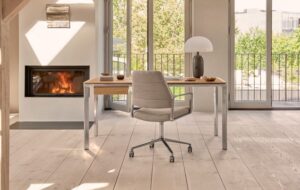
Steelcase has gathered the latest insights on designing work environments that enable better cognitive performance.
For many people, the brain is their most valuable asset at work. It powers creativity, learning, decision-making and connection. Yet we often treat it as if it were software – expecting it to perform at full capacity all day, every day. In reality, the brain is a biological organ that responds to its environment.
Noise, visual distractions and stress can drain cognitive resources, making it harder to focus and think clearly.
Just as ergonomic design supports physical wellbeing, it is equally important to consider “cognitive ergonomics” – creating environments that reduce mental strain and empower people to focus, think creatively and perform at their best.
Design alone cannot solve every challenge related to brain health, but it is one of the most immediate and impactful tools available to support it.

Visual Privacy for Better Focus
Maintaining focus has become increasingly difficult in today’s workplaces. People are exposed to a constant flow of conversations, movement and visual stimuli that compete for attention and increase cognitive load.
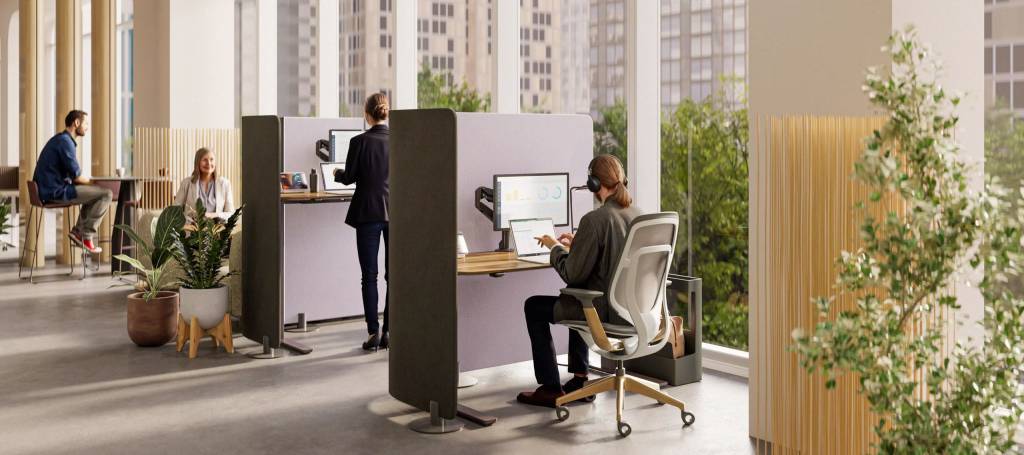
Research conducted by Steelcase in partnership with the Center for Healthy Minds at the University of Wisconsin-Madison found that visual privacy can significantly improve sustained attention.
Participants working in semi-shielded workspaces performed better on concentration tasks than those in completely open environments, even when noise levels remained the same.
By incorporating privacy screens, shielding elements and enclosed focus areas, organizations can help people protect their attention and conserve mental energy for meaningful work.
Create Opportunities for Cognitive Offloading
The brain is not designed to hold every piece of information at once. People perform better when they can externalize ideas and make thinking visible.
Whiteboards, pin-up surfaces and collaborative project spaces support this process by allowing teams to capture, organize and revisit information.
Known as cognitive offloading, this reduces the demands placed on working memory and frees capacity for analysis, creativity and problem-solving.
Physical environments also provide advantages that digital tools often cannot.
By displaying multiple ideas simultaneously, teams can more easily identify patterns, connections and opportunities.

Support the Brain Through Movement
Movement plays an important role in cognitive performance, yet it is often overlooked in workplace design. Studies have shown that physical activity supports attention, memory and decision-making.
Spaces that encourage people to switch between sitting, standing, perching or moving throughout the day can help maintain energy levels and engagement.
Height-adjustable desks, standing collaboration zones and active seating solutions give people greater choice and flexibility in how they work, helping them stay both mentally and physically active.

Build Spaces for Connection and Recovery
While focus is essential, innovation also relies on connection. Social spaces, cafés and community hubs create opportunities for spontaneous interactions, knowledge sharing and relationship building. These encounters help foster trust, collaboration and
psychological safety — key ingredients for innovation.
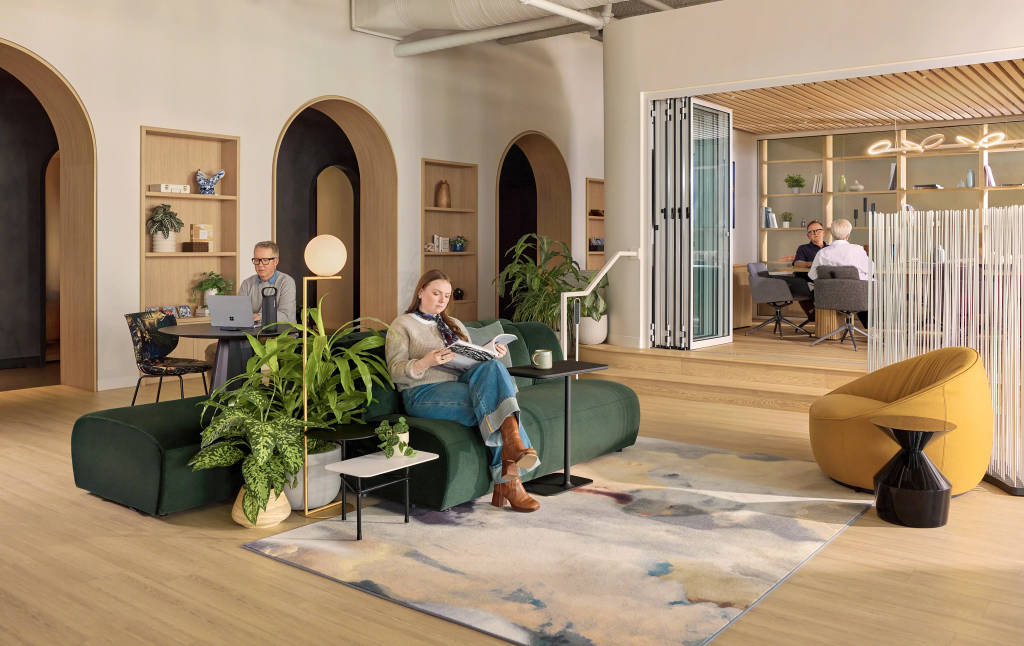
At the same time, people need opportunities to recover. Continuous concentration is not sustainable, and the brain benefits from moments of restoration throughout the day.
Quiet lounges, retreat spaces and environments that incorporate natural materials can help reduce stress and support wellbeing.
Elements such as wood, natural textures and calming colours create spaces where people can recharge before returning to focused work.
Designing for the Future of Work
As AI continues to automate routine tasks, uniquely human capabilities such as creativity, critical thinking and collaboration will become increasingly valuable.
The most effective workplaces will not be measured by the number of desks they contain, but by how well they support the ability to think, focus and be creative.
By creating environments that protect attention, reduce cognitive load and support wellbeing, organizations can help people think better, work better and thrive in the new brain economy.
Want to learn more about how workplace design can support brain health, enhance performance and help people thrive?
Download the latest edition of Work Better, Steelcase’s magazine exploring the research, insights and design strategies shaping the future of work.
Steelcase is a global design and thought leader in the world of work. Along with their expansive community of brands, Steelcase design and manufacture innovative furnishings and solutions to help people do their best work in the many places where work happens.