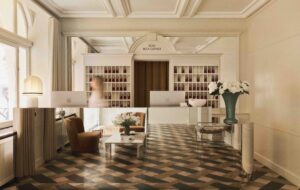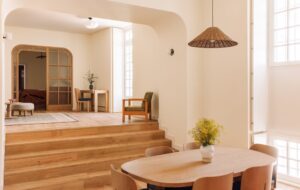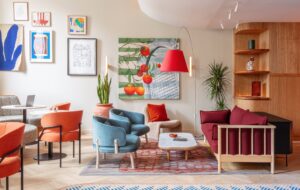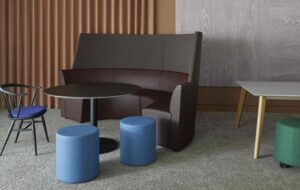
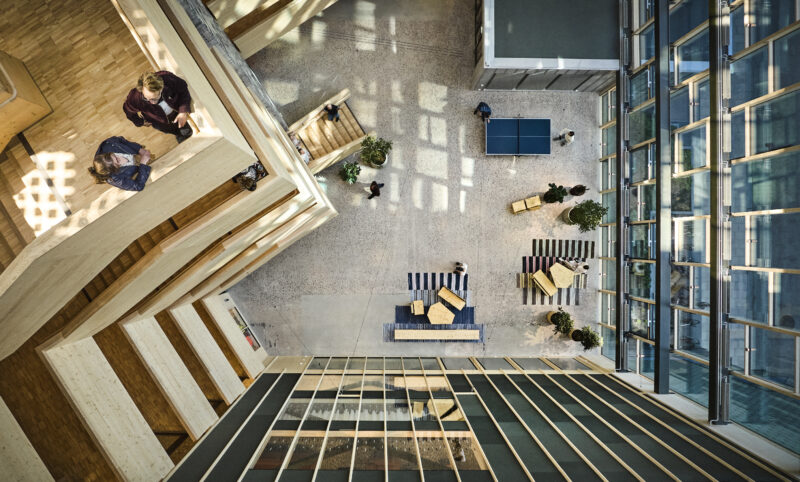
Lumi is and one of Sweden’s biggest reuse success stories, demonstrating how circular design can meet climate goals, market demand and community needs
White Arkitekter has restored the derelict 1970s headquarters of the Swedish Food Agency into a modern office building for client Vasakronan, one of Sweden’s largest property companies, in Uppsala, Sweden. The building, which now includes laboratories to service the many life-science companies in Uppsala, as well as amenities, was slated for demolition. However, White Arkitekter managed to preserve 80 per cent of the original concrete structure and foundation, thus avoiding the emissions typically associated with construction, and achieving a carbon footprint nearly half that of a comparable timber-frame building.
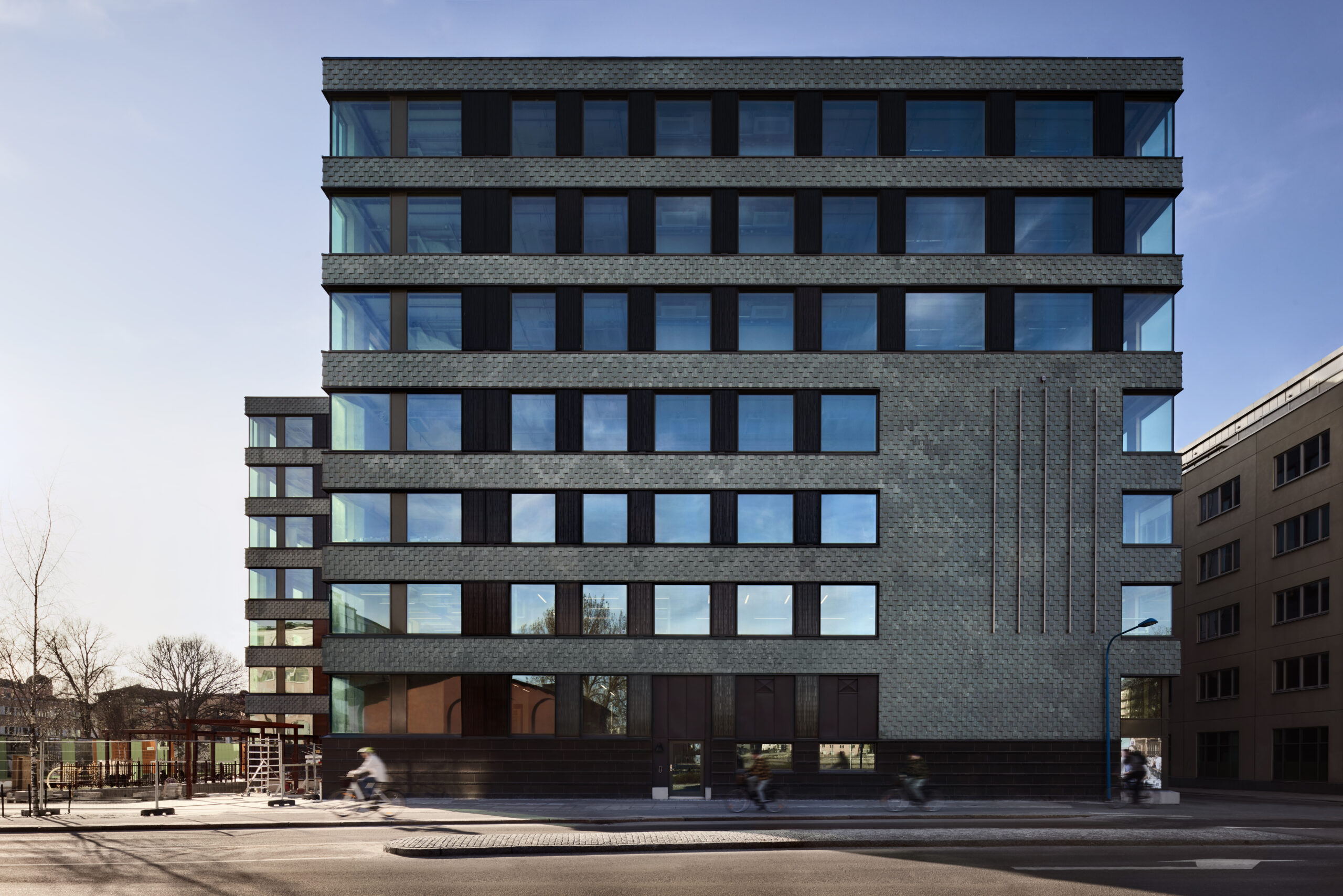
The project sets a benchmark for sustainable design. Reuse was at the centre of White Arkitekter’s design: 70 per cent of all doors were retained; 70 per cent of the aluminium sheets from the old roof were repurposed into decorative elements; and 105 tonnes of plasterboard were dismantled and reassembled. The façade is now clad in slate, a natural material with low climate impact, while integrated solar panels and improved insulation ensure energy efficiency and abundant daylight.
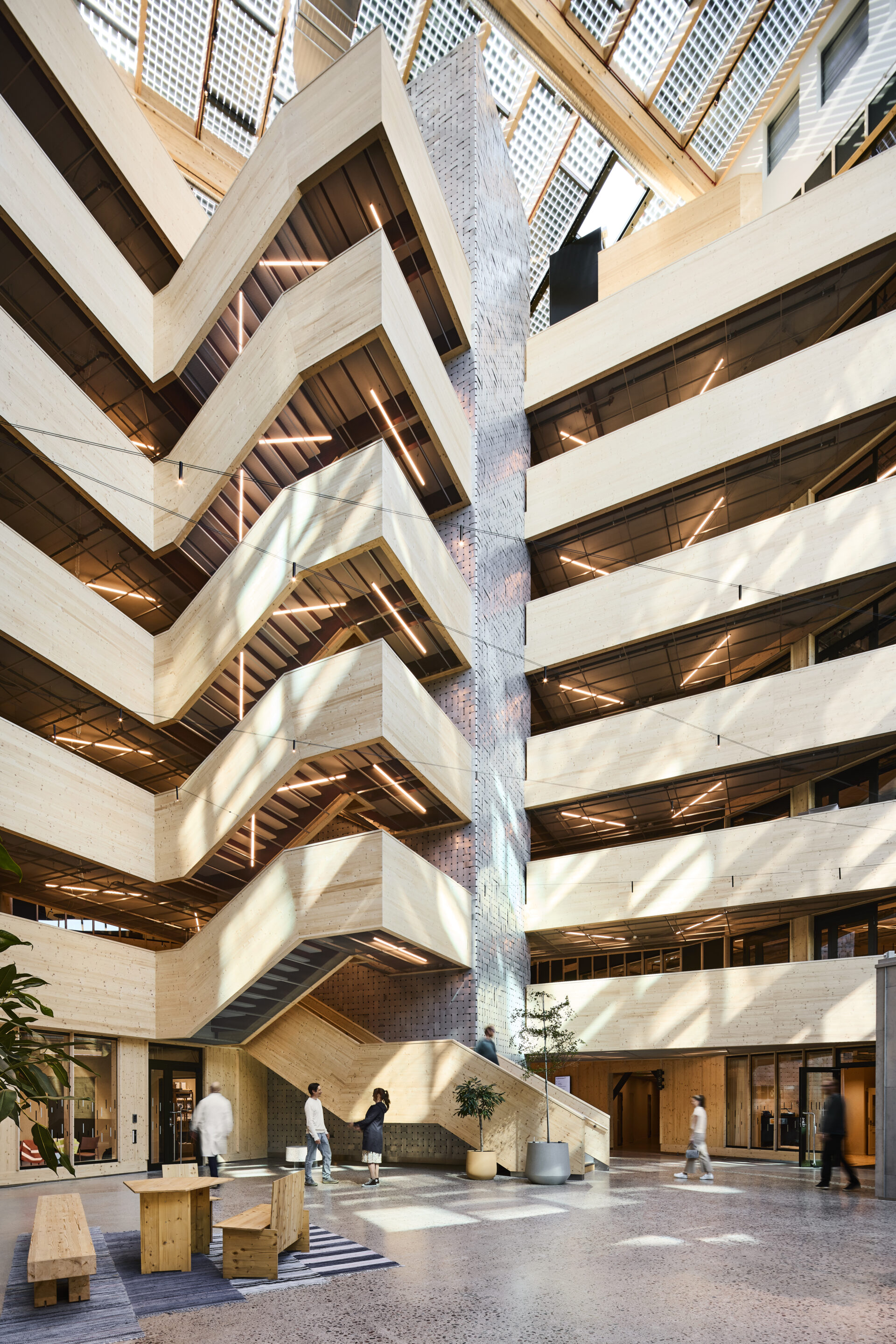
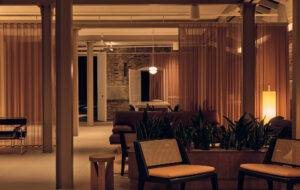
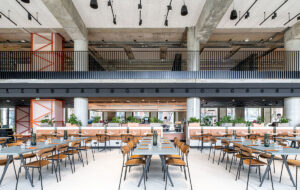
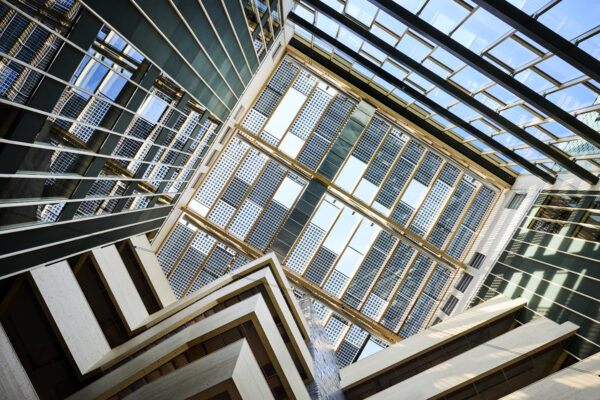
Not only has the project avoided high carbon emissions, the restoration has also brought new life to Southern Uppsala. The previous building used to be inflexible, lacked contact with the street and suffered from a façade with small windows. “There was only one main entrance, which made it difficult to divide the building,” explains Anders Tväråna, architect at White Arkitekter. “In addition, it was only four storeys high with low ceilings, it had a façade with small windows, and it had poor insulation, which meant that the building had its back to the city. The decisive move was to ‘turn’ the building around [and add three new storeys]. A former courtyard between the three buildings was covered and turned into a new inner centre. By building a lightwell between the buildings, covering it and adding new staircases, it became possible to access the buildings from the other side.”
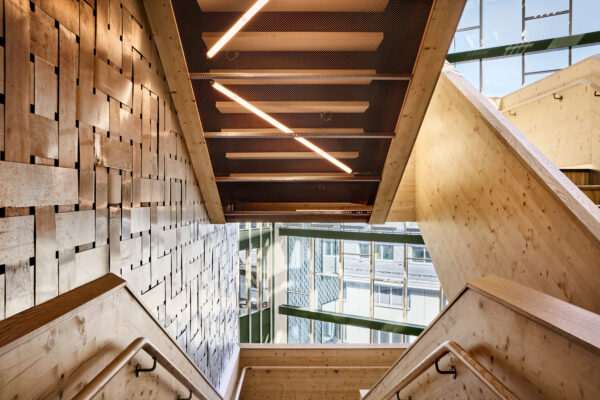
After demonstrating that retaining the foundations and structural frame could reduce the building’s climate impact by almost half, White Arkitekter has seen significant interest from other property owners. “Lumi is a powerful demonstration of how architecture can lead the way in climate action,” says Tväråna. “By committing to reuse at every level – from structure to finishes – we’ve shown that circular design isn’t just possible, it’s desirable. This project proves that the life of a building can continue much longer than previously considered, and that what was once a barrier in Southern Uppsala now brings life and movement to the area.”
Photography by Måns Berg
Find out more here.