Float Studio has completed the interior design of a 1,225 square foot office in an industrial building dating to 1911 in Dumbo, a Brooklyn waterfront neighbourhood known for its cobblestone streets and converted warehouses
Originally constructed as a warehouse for the Arbuckle Brothers coffee and sugar company, the building has retained many of its industrial qualities – generous proportions, large windows and sweeping views of Manhattan. “That context, both the history and the immediate connection to the city, became an important backdrop for the project,” says Float’s co-founder, Brad Sherman.
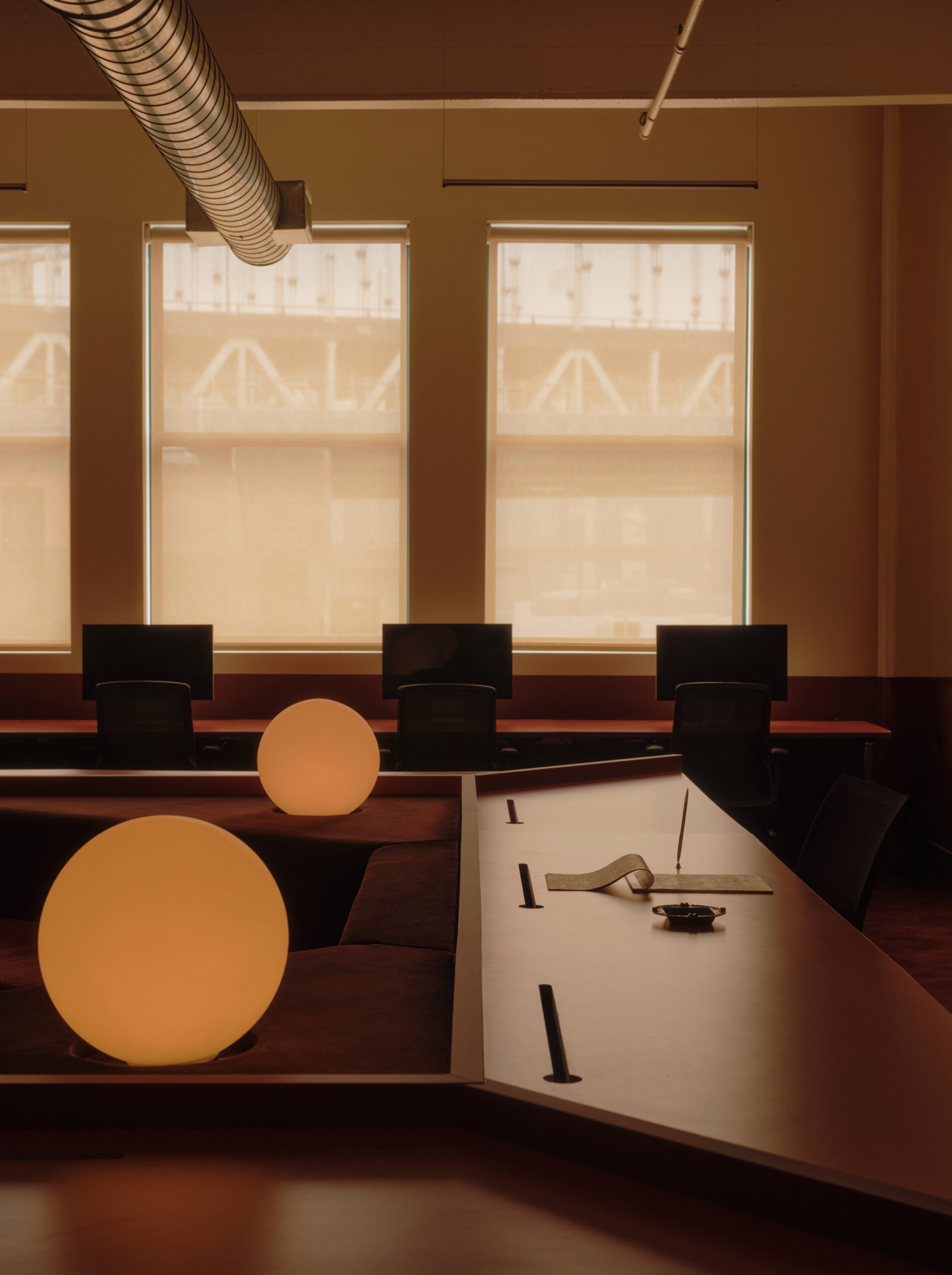
Inspired by 1970s interiors and retrofuturism, the project began with an unexpected reference. “We often return to the 1970s for its material richness and sense of optimism, but in this case, the reference was more specific. The client shared images from Willy Wonka, which introduced the idea of a ‘retro-future’ sensibility,” explains Sherman. “That became the guiding thread – less about recreating a period and more about capturing a spirit of playful futurism through colour, form and material.”
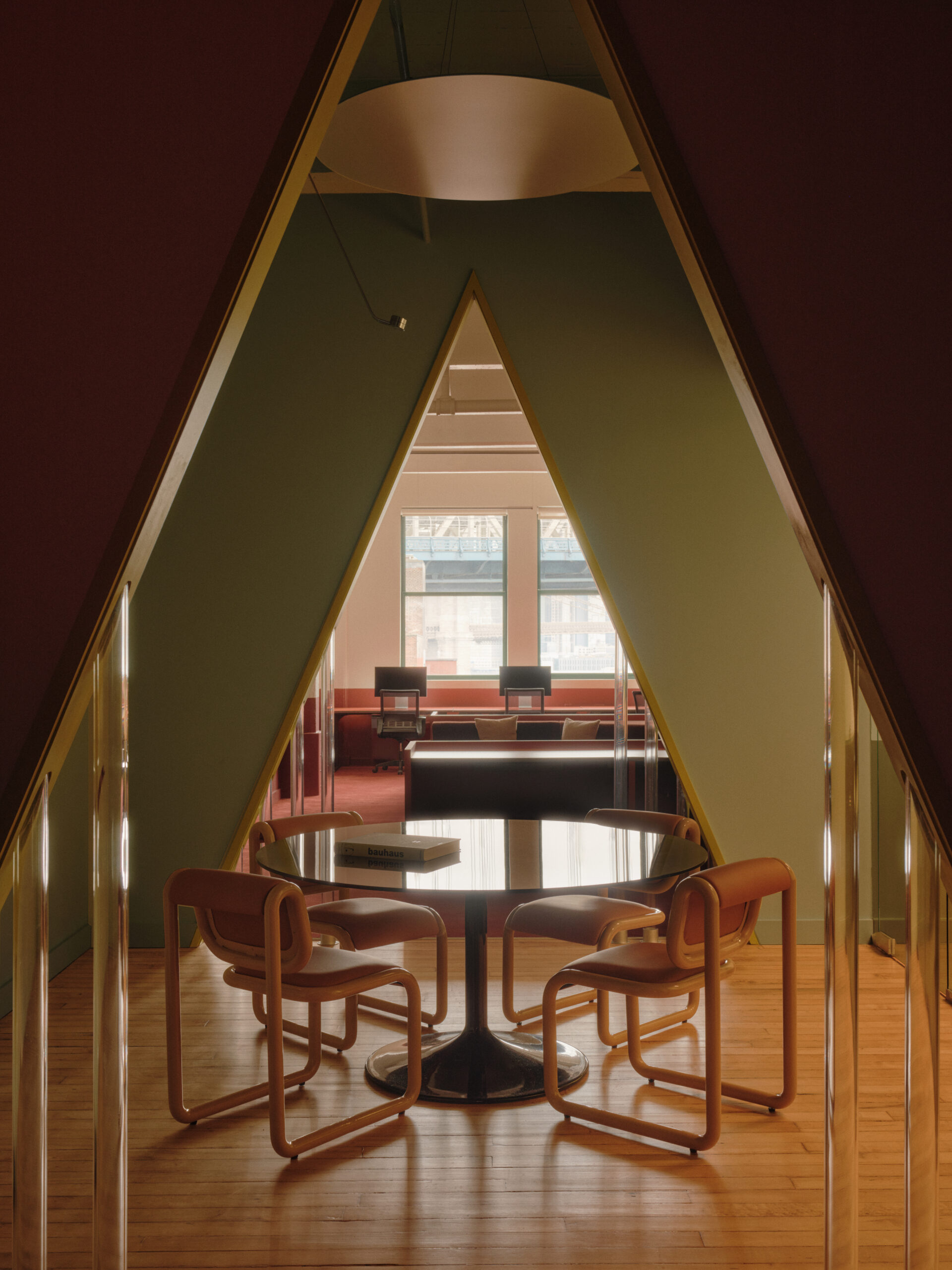
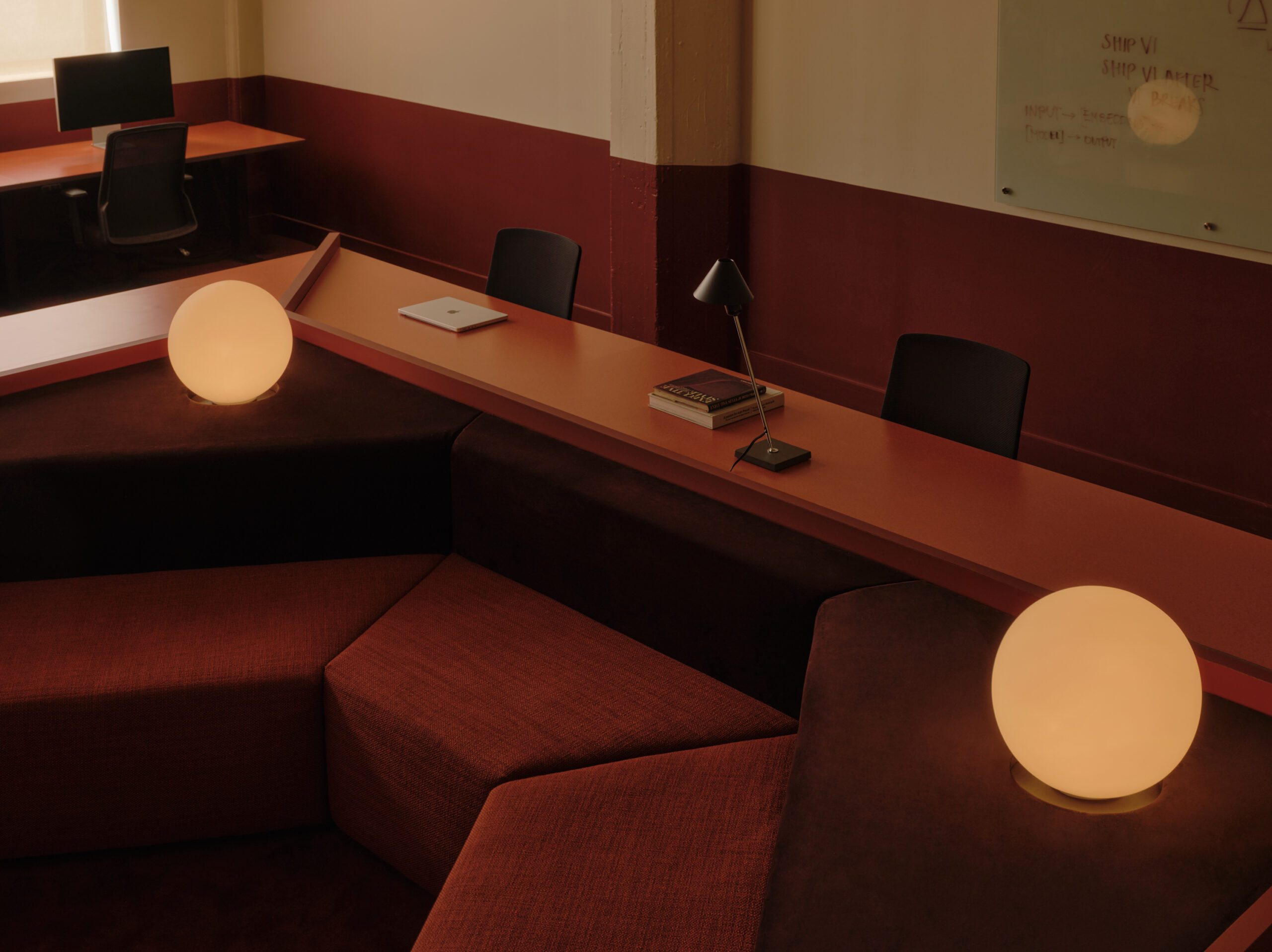
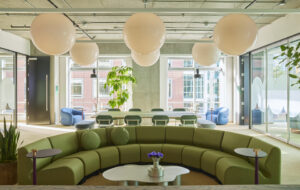
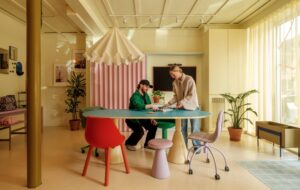
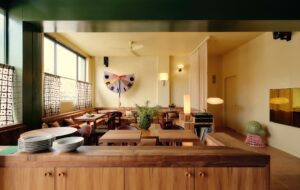
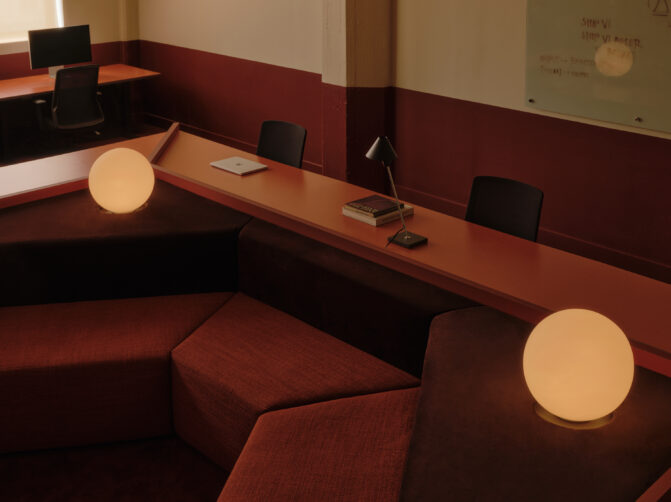
A rich palette of burgundy, oxblood, and jewel-toned greens is balanced with mint accents and soft neutrals. Material choices reference the 1970s without sacrificing functionality, including low-pile broadloom carpet and locally fabricated custom workstations finished in vintage-inspired laminates. Select vintage pieces and greenery provide the final touches, adding warmth and softening the space.
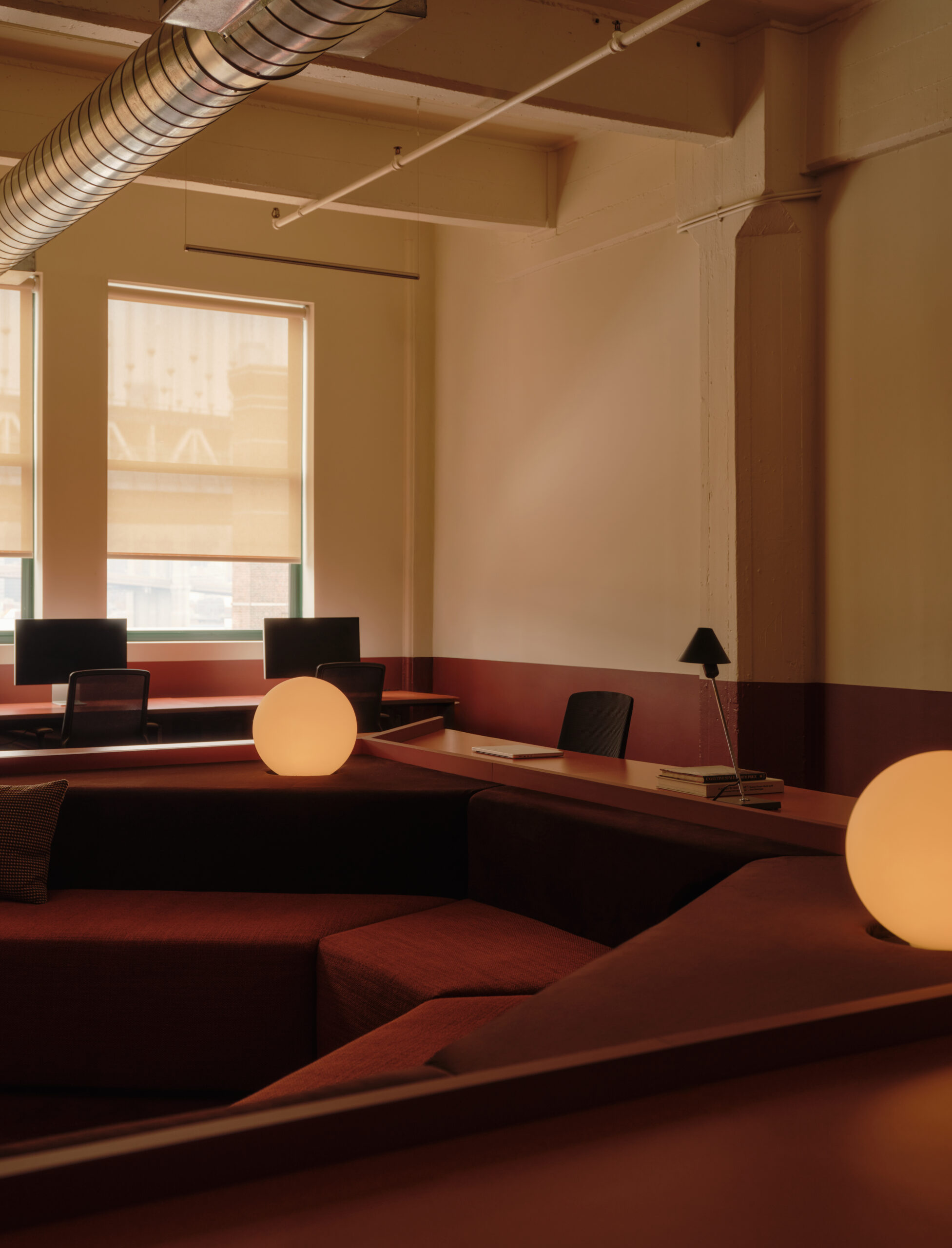
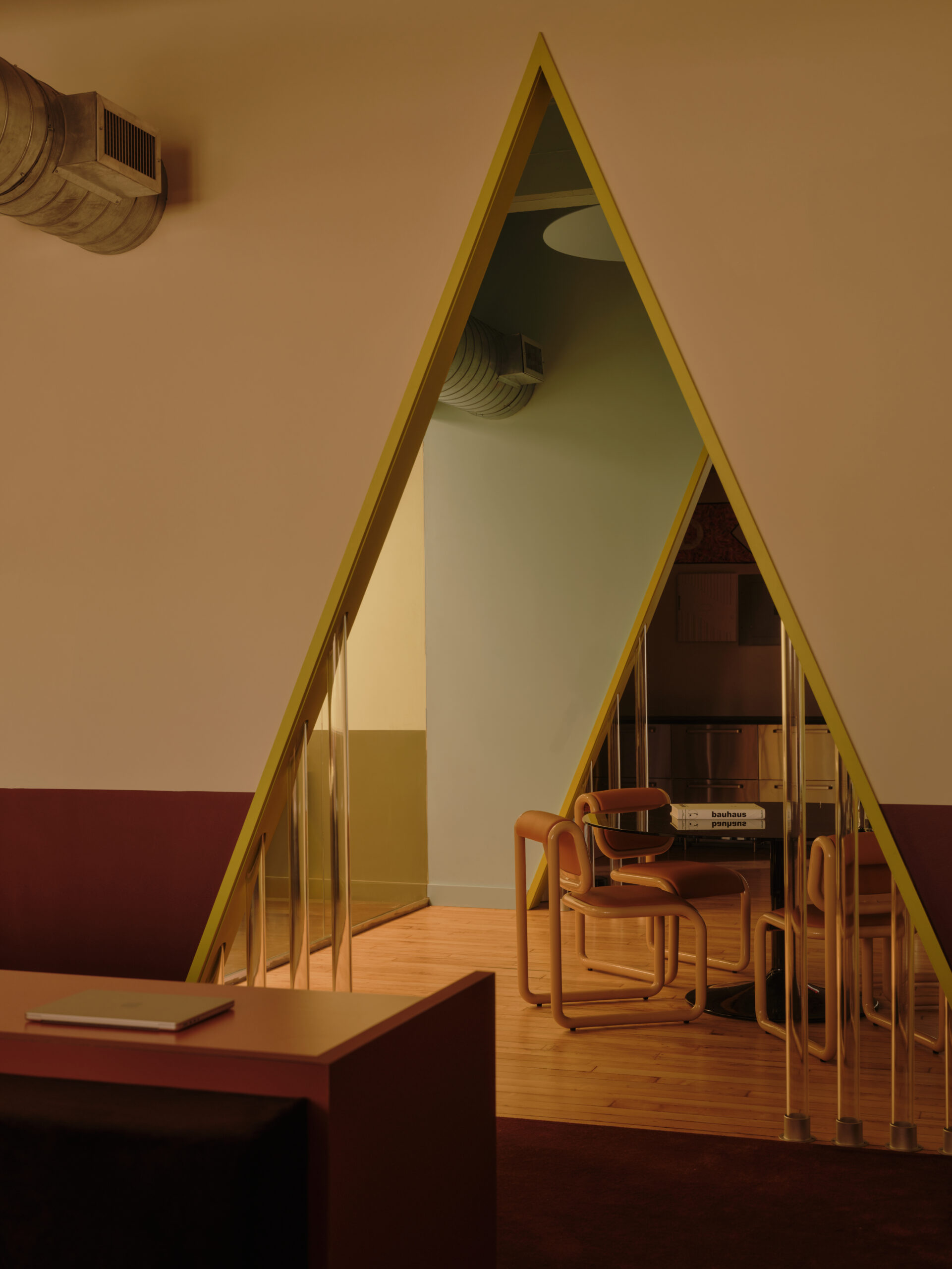
As the team fluctuates between two and 12 people on any given day, flexibility was key. The challenge was to maximise a compact footprint while still creating distinct zones for different types of work. “We approached this through what we think of as ‘light interior architecture’ – using subtle spatial interventions rather than relying solely on furniture. The sequence begins with a kitchen at the entry, which acts as a threshold, and then moves through a set of double triangular openings that define a meeting area and enclose a more private conference room. The workspace sits at the far end,” explains Sherman.
To counterbalance digitally intensive work and to encourage meaningful human interaction, the studio introduced clear spatial organisation, areas for deep work, places for spontaneous gathering and warm, tactile materials. The project demonstrates how rethinking an existing footprint – Antiwork were already working in the space – can have as much impact as expanding into a larger office. “The compact workspace reflects Antiwork’s experimental spirit and their vision of an office that evokes ‘the future of the past’,” says Sherman.
Photography by Felix Speller
View Float Studio’s website here.