OnOffice pays a visit to east London to meet Luke Pearson and Tom Lloyd, and find out how the design luminaries’ work has evolved across the years

What Tom and I have always enjoyed are briefs,” says Luke Pearson. “A blank sheet of paper and a client saying, ‘Just give us something lovely’ has never ticked all the boxes for us. It’s like, where’s the challenge in that?”
Pearson is the co-founder, along with Tom Lloyd, of the award-winning London-based design studio Pearson Lloyd.
The pair met at the Royal College of Art in 1991 and launched their eponymous studio in 1997.
In the nearly three decades since then, they have become one of the most highly respected practices in Britain, with an enviable client list and projects stretching across a range of sectors, from office furniture and aviation to healthcare.
From the start, the founders’ collaboration has been a blend of “studio and consultancy”, says Lloyd, speaking from their office in east London, which is housed inside a series of retrofitted Victorian and 1980s workshops.
“If you look at our work,” he continues, “sometimes it feels very culture-facing and other times it feels functional, problem-solving or market-focused.”
As Pearson suggests, the duo and their team thrive most when given constraints.
Nowhere is this more obvious than in their work for aviation clients. The pair won their first project in the sector back in 2001, when Virgin Atlantic approached them to design its Upper Class seat.
Then, in 2007, they won a pitch for Lufthansa, and have been designing that airline’s Business Class seats and cabins ever since. These projects epitomise that combination of “studio and consultancy” that Lloyd describes.
“It’s a lovely marriage between human factors, pure ergonomics, sensorial response to an environment, furniture architecture on the one side, and stringent technical parameters on the other,” says Pearson. “It’s got to work, be very lightweight and high-performance.”
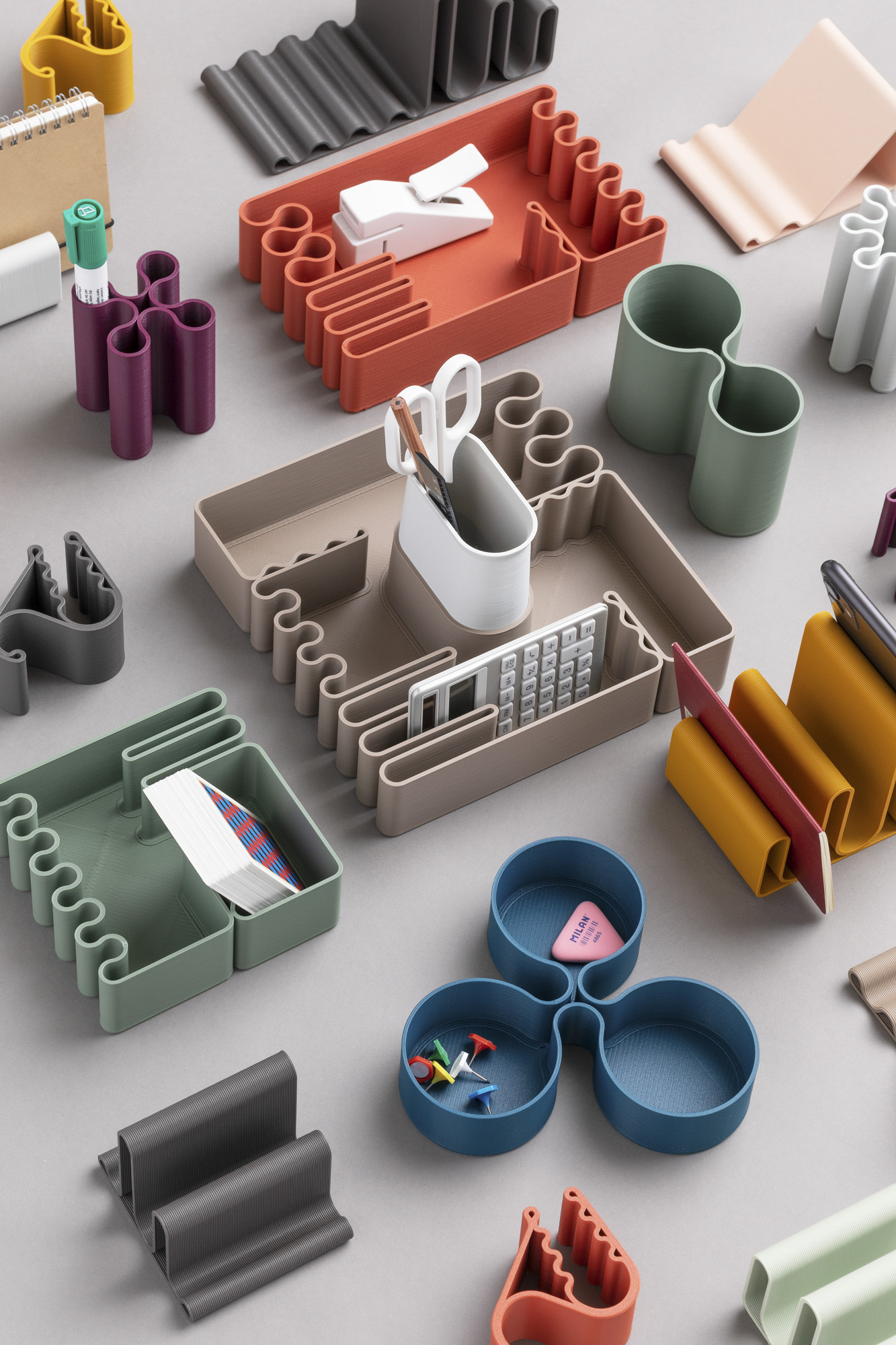
“If you look at our work, sometimes it feels very culture-facing – other times it feels functional, problem-solving or market-focused”
This is the team’s happy place: as Pearson puts it, he and Lloyd are “like kids in a sweet shop” every time Lufthansa brings a new aircraft to them, requiring new configurations and offering fresh challenges.
Alongside aviation, it’s the office environment that Pearson Lloyd is most associated with, having created workspaces and furniture for much of the past 30 years. And given the studio’s age, it’s possible to chart the evolution of office design and use through their work. “We’ve seen this parabolic arc of change to the office,” says Pearson.

“The Aeron chair [launched in 1994 by Herman Miller] was the perfect solution for a task chair. But we’re now no longer sitting in a task chair all day. It’s about mobility, workshops, changing and creating spaces.”
Back in 2009, Pearson Lloyd designed Parcs for Austrian office furniture manufacturer Bene, a collection of furniture offering “a flexible and social office landscape” that was the company’s best-selling product for the following decade.
“That was the beginning,” says Pearson. Since then, the studio has designed countless office products for Bene and others, recognising the shifting nature of work, and how workspaces and office furniture play different roles today.
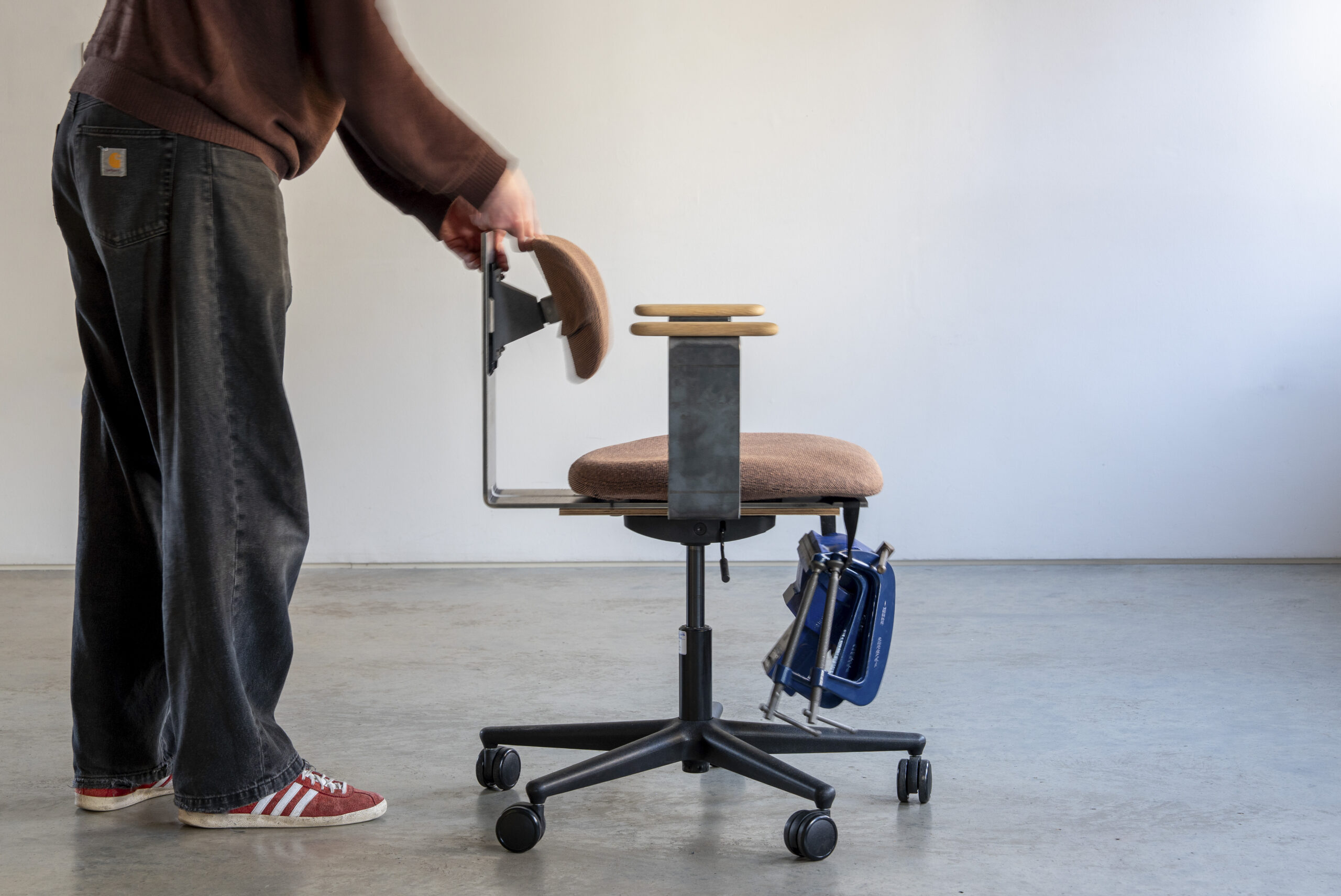
Looking to the future, they admit that nobody can know for certain how the office environment will evolve. “Agility and flexibility are two of the things that we’re looking at most closely,” says Pearson.
However, this also brings another issue into the spotlight: circularity. “If you can’t predict how long a product will be relevant, how long it will be in existence,” says Pearson, “then you’ve got to think about the materials as a future resource.”
In recent years, the duo have added this as another layer of depth to their work. “We’re reshaping our practice around circularity and carbon,” says Lloyd, “pulling the planet back into the centre as a stakeholder.”
You can see this in their furniture projects over the past few years, which retain a quintessential Pearson Lloyd functionality, but combine it with a newfound focus on repairability and circularity.
In 2019, for instance, they designed the Cross Chair for Danish furniture brand Takt, which can be easily dismantled, repaired and recycled at the end of its life.
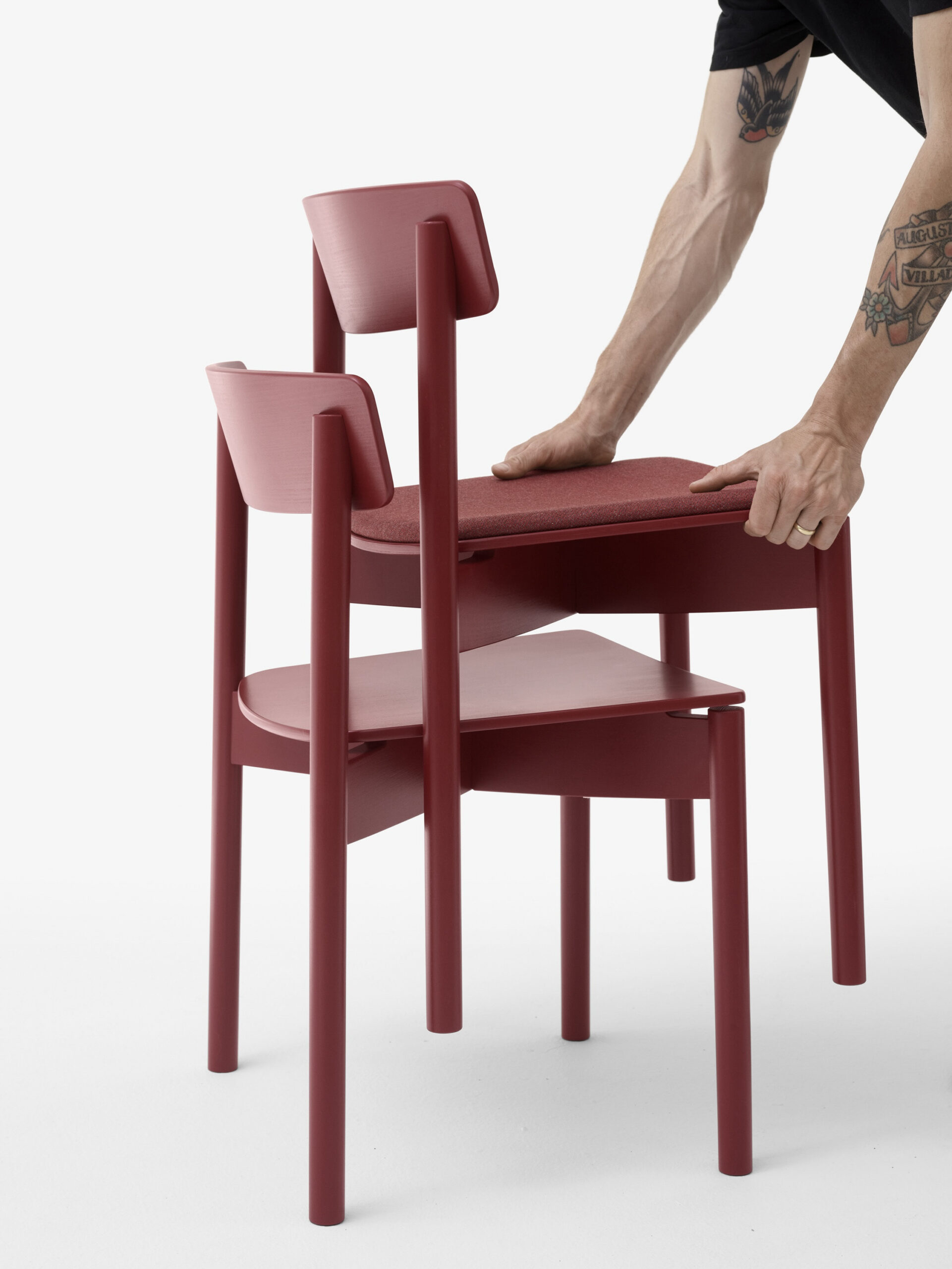
In 2023, they came out with a recyclable workplace seating system for Profim; the following year, they designed Contour, an office chair for Senator made from recyclable materials.
For Lloyd and Pearson, this mindset has to be embedded from the beginning, not added on at the end. “If you don’t write a good brief, you don’t get a good execution, certainly from a carbon perspective,” says Lloyd. The pair are now going one step further and undertaking separate studies focused on sustainability.
Lloyd is doing a course at the Regenerative Design Lab exploring regenerative cultures, while Pearson is on a circularity skills pilot programme called Design Skills for Embedding Circularity.
As he explains, it’s important to remember that they’re “designing for the inevitability that it is going to end up being waste”. The pair share a mutual approach to “radical demateriality”, which they continually strive to achieve.
There are a number of new projects on the horizon. In the autumn, the studio will be launching what Pearson describes as “a significant project for Bene” that addresses the fluid nature of work today; there’s a project with Modus to be shown during Clerkenwell Design Week; and they have new work on the way with Senator and Allermuir, two brands for which Pearson Lloyd has designed many times over the years.
What is it about designing furniture that keeps them fascinated and challenged? “There’s always a reinterpretation, whether it’s cultural or material or practical,” says Lloyd.
Pearson nods, then adds: “The only thing that doesn’t change is our bums, our legs. But what we do in those chairs is always changing.”
Photography courtesy of Pearson Lloyd / Taran Wilkhu